
Share this publication
Send this Chervil resource to someone who may find it useful.
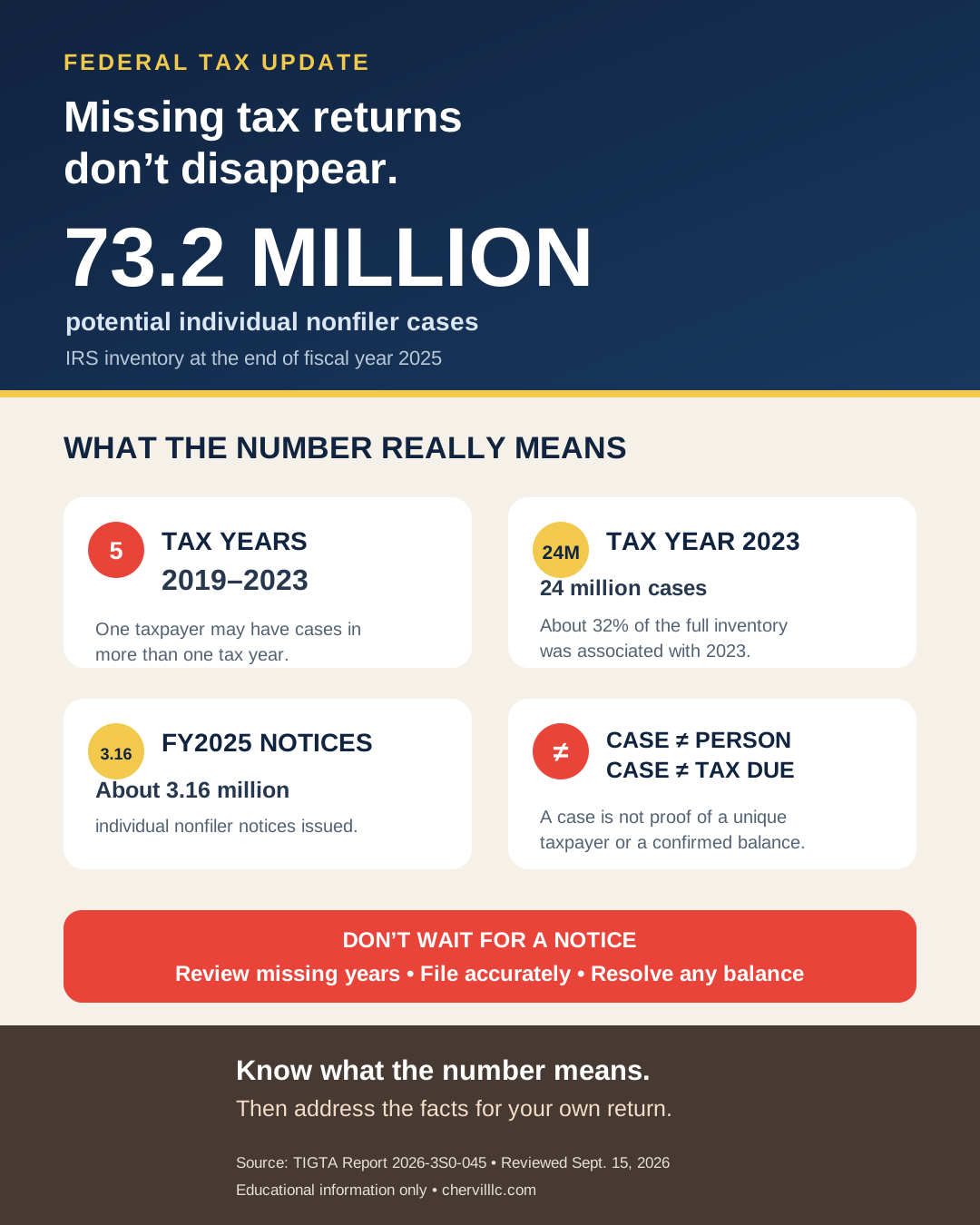
A recent federal oversight report has drawn attention to an extraordinary number: 73.2 million potential individual nonfiler cases in the IRS inventory for tax years 2019 through 2023.
That figure deserves attention—but it also needs context. It does not mean that 73.2 million different people have been proven to owe taxes. It is a count of potential nonfiler cases, and one taxpayer may appear in more than one tax year. Some cases may involve people who were not required to file, accounts that need correction, or returns that were filed but have not been properly matched or processed.
The practical message is straightforward: an unfiled return does not become harmless simply because the IRS has a large workload or has not yet sent a notice.
What the federal report actually found
The Treasury Inspector General for Tax Administration, commonly called TIGTA, reviewed IRS compliance activity through fiscal year 2025. At the end of that fiscal year, the IRS had identified 73.2 million potential individual nonfiler cases covering tax years 2019 through 2023.
The report provides additional context:
- 24 million cases, or approximately 32% of the inventory, were associated with tax year 2023.
- The IRS issued about 1.68 million individual nonfiler notices in fiscal year 2024.
- The IRS issued about 3.16 million such notices in fiscal year 2025, including approximately 2.92 million notices connected to tax year 2023.
- TIGTA reported that the IRS conducted no revenue-officer compliance sweeps for high-income nonfilers during fiscal year 2025 because of resource limitations.
- The combined IRS Examination and Collection workforce fell from 27,217 employees in fiscal year 2024 to 19,612 in fiscal year 2025. As of January 10, 2026, those functions had 17,517 employees.
These figures explain why some cases may remain unresolved for a long time. They do not cancel filing requirements, stop interest from accruing, or guarantee that a taxpayer will avoid future enforcement.
A “potential nonfiler case” is not the same as a confirmed tax debt
The IRS receives information returns from employers, banks, payment platforms, brokerages, retirement-plan administrators and other third parties. Forms such as W-2s and 1099s may indicate that a person had income during a year for which the IRS cannot match a filed return.
That mismatch can lead to a potential nonfiler case. However, the IRS still must determine whether the taxpayer was required to file and whether any tax is due. A taxpayer may have withholding, deductible expenses, credits, losses, basis information or other facts that are not fully reflected in third-party reports.
For that reason, neither the 73.2 million figure nor the receipt of an initial nonfiler notice automatically proves that a person owes the amount the IRS may initially calculate.
What can happen when a required return is not filed
The IRS may send one or more notices asking for the missing return or an explanation. If the matter remains unresolved, the IRS may prepare a Substitute for Return using information it has received from third parties.
A substitute return may not include every deduction, credit, filing-status benefit or business expense the taxpayer could claim on a properly prepared return. The IRS can then propose an assessment and, if it remains unpaid, begin collection action. The taxpayer generally retains the right to respond, provide corrected information and file an accurate return, but notice deadlines matter.
Ignoring correspondence can make the problem more difficult and more expensive to resolve.
The financial cost of waiting
For individuals and many businesses, the federal failure-to-file penalty is generally 5% of the unpaid tax for each month or part of a month the return is late, up to 25%. The failure-to-pay penalty is generally 0.5% of unpaid tax per month or part of a month, also up to 25%. Special interaction rules apply when both penalties run during the same month, and interest can continue to increase the balance.
Penalty amounts depend on the type of return, the filing date, the tax due, prior payments, available credits and any applicable relief. Taxpayers should not assume that the same calculation applies to every situation.
Even when a taxpayer cannot pay the full balance, filing the required return is usually an important first step. The IRS directs taxpayers to file all required past-due returns regardless of whether they can pay in full, then consider available payment options.
Waiting can also cost a taxpayer a refund
Some people avoid filing because they expect to owe, only to discover that withholding or refundable credits could produce a refund. A taxpayer who waits too long may lose the right to receive it.
The general federal refund-claim rule is the later of three years from the date the return was filed or two years from the date the tax was paid, subject to limits and exceptions. For an original past-due return involving withholding or estimated payments, the IRS warns that the return generally must be filed within three years of its due date to claim the refund.
The IRS may also hold a current refund when its records show that one or more prior-year income-tax returns are missing.
A special concern for self-employed taxpayers
For self-employed individuals, filing affects more than income-tax compliance. Net earnings from self-employment are reported through the federal return and Schedule SE. If that income is not reported, it may not be credited to the taxpayer’s Social Security earnings record.
Social Security generally treats a self-employment return as timely for earnings-record purposes when it is filed within three years, three months and 15 days after the close of the tax year, although limited exceptions may apply. Delaying beyond that period can therefore affect future retirement or disability benefit calculations.
Indiana taxpayers should review state filing obligations too
The TIGTA figures discussed in this article concern federal IRS cases. Indiana income-tax obligations are separate. Resolving a federal filing problem does not by itself confirm that every required Indiana return has been filed.
Indiana taxpayers should review the same missing years for state and applicable county income-tax filings. The Indiana Department of Revenue bases the state filing status on the federal filing status—for example, a joint federal return is paired with a joint Indiana individual return—and provides prior-year forms and account services through its official website and INTIME portal.
Practical steps for someone with a missing return
- Confirm which years are missing. Review personal records, IRS account information and any federal or state notices.
- Gather complete income documents. Include W-2s, 1099s, brokerage records, retirement distributions, self-employment records and other relevant documents. IRS wage-and-income transcripts can help identify reported items, but they may not contain all information needed to prepare an accurate return.
- Determine whether a filing requirement existed for each year. Filing requirements vary by age, filing status, income type, gross income, self-employment income and other circumstances.
- Prepare the taxpayer’s own accurate return. Do not rely on a proposed substitute return as a complete reflection of deductions, credits, basis or business expenses.
- Respond to notices by the stated deadline. Use the address, fax number or response method shown on the notice, and keep proof of filing and delivery.
- File even if full payment is not possible. Pay what can reasonably be paid and review payment-plan or other resolution options after the correct liability is established.
- Review federal and state years together. A missing federal return may be accompanied by an unresolved Indiana or other state obligation.
The bottom line
The IRS’s 73.2 million-case inventory reflects a major compliance and administrative challenge. It is not proof that 73.2 million people owe taxes, but it is a reminder that tax agencies continue to receive third-party income information and can return to unresolved years later.
Taxpayers who know—or suspect—that a required return is missing should not wait for enforcement activity before reviewing the facts. Filing an accurate return can protect available refunds and credits, reduce additional penalties, preserve important records and provide a clearer path toward resolving any balance due.
Official sources
- Treasury Inspector General for Tax Administration: Trends in Compliance Activities Through Fiscal Year 2025
- IRS: Filing past-due tax returns
- IRS: Failure-to-file penalty
- IRS: Failure-to-pay penalty
- IRS: Time you can claim a credit or refund
- IRS: What to expect after receiving a nonfiler compliance alert
- Social Security Administration: Reporting self-employment income
- Indiana Department of Revenue: File my taxes
Educational-use disclaimer
This publication provides general educational information and is not individualized tax, legal, financial or accounting advice. Tax rules, deadlines and available remedies depend on the taxpayer’s facts and may change. Readers should review current official guidance and consult a qualified professional regarding their circumstances. Chervil LLC does not guarantee eligibility for any filing position, credit, refund, penalty relief or payment arrangement.
CONNECT WITH CHERVIL LLC
Do you need help addressing a prior-year return or tax notice?
Chervil LLC provides prior-year return preparation and tax-notice review based on each taxpayer’s facts and documentation.